


Protecting your skin from the sun is essential at every age; however, for those with mature skin, sunscreen becomes even more important. This is because, as we age, our skin naturally loses elasticity, becomes thinner, and is more prone to dryness, fine lines, and hyperpigmentation. Moreover, sun exposure is one of the leading causes of premature aging, and therefore, using sunscreen daily is among the most effective ways to preserve your skin’s health and appearance. Ultimately, consistent protection can help slow visible signs of aging while also reducing the risk of long-term damage.
In this guide, I’ll walk you through everything you need to know about choosing the best sunscreens for mature skin. We’ll cover what ingredients to look for, common mistakes to avoid, dermatologist-recommended picks, and practical tips for applying sunscreen effectively. You’ll also find FAQs answered in simple, clear language.
Why Sunscreen Is Essential for Mature Skin
Even if you’ve never been consistent with sunscreen before, it’s never too late to start. Here’s why mature skin especially benefits from daily SPF:
- Protection Against Skin Cancer – The risk increases with cumulative sun exposure. Sunscreen reduces this significantly.
- Prevention of Premature Aging – Sun exposure is the number one cause of wrinkles, sagging, and age spots. Even small amounts of daily exposure add up.
- Maintaining Even Skin Tone – Sunscreen helps prevent new discoloration and allows brightening treatments to work more effectively.
What to Look for in Sunscreens for Mature Skin
Not every sunscreen is created equal. For aging skin, here are the features that make the most difference:
- Broad-Spectrum Protection – Blocks both UVA (aging) and UVB (burning) rays.
- SPF 30 or Higher – Dermatologists recommend at least SPF 30 daily, SPF 50 if outdoors.
- Hydrating Ingredients – Look for hyaluronic acid, glycerin, ceramides, or squalane to keep skin plump.
- Antioxidants – Vitamin C, E, green tea, or niacinamide help fight free radicals.
- Lightweight Texture – Mature skin often dislikes heavy, greasy creams.
- Non-Irritating Formula – Fragrance-free and dermatologist-tested are safer choices.
Mineral vs. Chemical Sunscreens for Mature Skin
Understanding the difference helps you pick what works best for you:
• Mineral (Physical) Sunscreens – Use zinc oxide or titanium dioxide to reflect UV rays. They’re great for sensitive skin but may leave a white cast (though newer formulas are more sheer).
• Chemical Sunscreens – Use ingredients like avobenzone or octocrylene to absorb UV rays. They’re usually lighter but may irritate very sensitive skin.
For mature skin, both can work well. Many dermatologists lean toward mineral for gentleness.
The Best Sunscreens for Mature Skin (Dermatologist-Recommended)
Here are some tried-and-true picks loved by dermatologists and users:
- EltaMD UV Clear Broad-Spectrum SPF 46 – Lightweight, niacinamide-enriched, great for sensitive or acne-prone skin.
- CeraVe Hydrating Mineral Sunscreen SPF 30/50 – Affordable, with ceramides and hyaluronic acid for moisture.
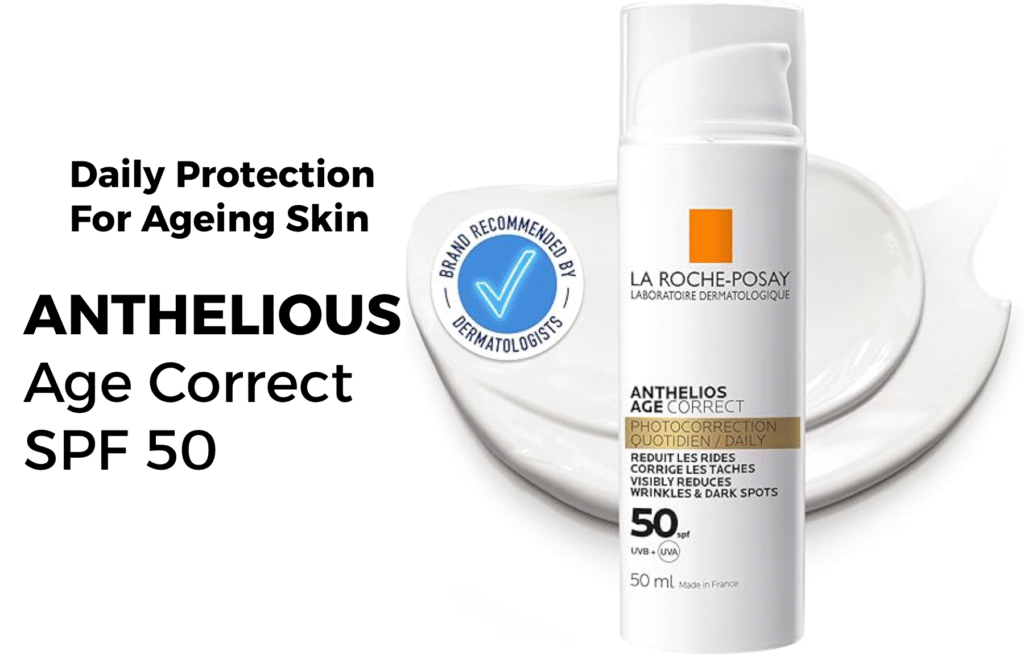
- La Roche-Posay Anthelios Age Correct SPF 50 – Fast-absorbing, non-greasy, good for daily wear.
- Neutrogena Hydro Boost Water Gel SPF 50 – Infused with hyaluronic acid, ideal for dry mature skin.
- Olay Regenerist Mineral Sunscreen SPF 30 – Combines SPF with peptides and antioxidants.
- Supergoop! Unseen Sunscreen SPF 40 – Invisible, weightless, doubles as a makeup primer.
- ISDIN Eryfotona Actinica SPF 50+ – Lightweight, with DNA repair enzymes and antioxidants.
- Colorescience Sunforgettable Total Protection Face Shield SPF 50 – Tinted mineral sunscreen that hydrates and evens tone.
You can shop for these sunscreens online at Amazon, Lookfantastic, or JD Williams, and they’re also stocked in high street stores like Boots, Superdrug, and John Lewis
Clinically Proven Efficacy and User Experience
The efficacy of Anthelios Age-Correct SPF50 is not merely anecdotal. Clinical studies cited by the brand demonstrate significant improvements after just four weeks of use, including a 15% reduction in wrinkles and fine lines, a 26% decrease in dark spots, and a 15% increase in skin elasticity. These data-driven results provide a compelling case for the product’s corrective capabilities.
In terms of user experience, the sunscreen is praised for its elegant, ultralight texture that leaves a non-greasy, velvety finish.
It is also non-comedogenic and hypoallergenic; therefore, it is suitable for sensitive and blemish-prone skin. In addition, positive reviews from users with varying skin types and concerns highlight its smooth application, moisturising properties, and effective protection even in challenging environments. Furthermore, some users have noted that the product blends seamlessly into the skin without leaving a white cast. As a result, it provides a beautiful, soft, matte finish that layers effortlessly under makeup.
5. Comparative Analysis: How La Roche-Posay Stacks Up
The La Roche-Posay Anthelios Age-Correct formula is a formidable contender in a highly competitive market of sunscreens designed for mature skin. To provide a balanced perspective, it is valuable to compare its features to other expert-recommended options.
| Product Name | Key Features & Ingredients | Why It’s Great for Mature Skin | Ideal User |
| La Roche-Posay Anthelios Age-Correct SPF50 | Broad-spectrum protection (UVA/UVB, IR-A), anti-pollution, antioxidants, fragmented Hyaluronic Acid, Phe-Resorcinol, Niacinamide | Corrects existing signs of aging while preventing new damage; non-greasy, velvety finish; clinically proven results. | The discerning user seeking a true skincare-sunscreen hybrid that actively fights wrinkles and dark spots. |
| EltaMD UV Clear Broad-Spectrum SPF 46 | 100% mineral, contains zinc oxide, Niacinamide, and Hyaluronic Acid. | Gentle on sensitive and acne-prone skin; lightweight, non-greasy formula; won’t clog pores. | Individuals with sensitive or rosacea-prone skin who also need a lightweight, non-irritating formula for daily use. |
| ISDIN Eryfotona Actinica SPF 50 | Mineral-based (Zinc Oxide), DNA Repairsomes, Vitamin E. | It contains enzymes that help repair past sun damage, and in addition, it features an ultra-lightweight, non-greasy texture. Moreover, it helps reduce the appearance of sun spots, thereby improving overall skin tone and radiance. | Those with significant existing sun damage who want a product that helps correct as it protects. |
| Neutrogena Invisible Daily Defense SPF 60 | Chemical filters, Hyaluronic Acid, Niacinamide, antioxidants. | Excellent value for money; invisible finish on all skin tones; hydrating, lightweight, serum-like texture. | The budget-conscious consumer who wants high-level, invisible protection with added skincare benefits. |
| Colorescience Sunforgettable Total Protection Face Shield Flex SPF 50 | Mineral-based (Zinc Oxide), transforming tint with iron oxides, and antioxidants. | Provides a high-coverage, makeup-like finish; shields skin from blue light; can be used as a true makeup or skin tint. | This option is ideal for users who prefer a mineral sunscreen; in addition, it offers a tinted, high-coverage finish, and therefore, it can easily replace their foundation. |
While each product has unique strengths—from EltaMD’s gentle, minimalist approach to ISDIN’s innovative DNA repair enzymes—La Roche-Posay’s offering stands out for its comprehensive blend of prevention and correction.
It not only combines broad-spectrum protection with a powerful cocktail of active ingredients, but it also includes compounds that are clinically proven to address the most common signs of photoaging. Consequently, this positions it as a top choice for anyone seeking a dedicated and effective anti-aging regimen.
See the full list of the best sunscreen for mature skin dermatologist recommended.”
Tips for Applying Sunscreen on Mature Skin
Application matters as much as the product itself. Here’s how to get the best protection:
1. Use enough product: Most people under-apply sunscreen. A good rule is about half a teaspoon for your face and neck. Think of it as giving your skin a protective coat rather than a light layer.
2. Cover the forgotten spots: Ears, hands, chest, and even the hairline are often overlooked, but they show early signs of aging. I personally noticed sunspots on my hands before I realised how much sun exposure they get daily.
3. Reapply every 2 hours: Especially if outdoors, sweating, or swimming. Keep a travel-size handy. I keep a travel-size sunscreen in my bag so I never skip this step.
4. Layer correctly: Sunscreen goes after moisturiser, before makeup. This keeps your skincare routine intact while ensuring maximum protection.
5. Tinted sunscreens are a bonus: They don’t just protect but also provide a natural, even finish. I love using a tinted sunscreen on days when I don’t want to wear heavy foundation.
Common Mistakes to Avoid
- Skipping SPF on cloudy days – UV rays still penetrate clouds.
- Relying only on makeup with SPF – Not enough coverage.
- Not reapplying – Sunscreen breaks down in a few hours.
- Using expired products – Always check the date.
Lifestyle Tips for Better Sun Protection
Sunscreen works best as part of an overall sun-smart lifestyle:
- Wear wide-brimmed hats and UV-protective sunglasses.
- Seek shade during peak sun hours (10 a.m.–4 p.m.).
- Choose UPF-rated clothing for added protection.
- Eat antioxidant-rich foods like berries, green tea, and leafy greens.
Frequently Asked Questions (FAQs)
Do I need sunscreen if I’m over 50?
Yes. Skin is thinner and more vulnerable with age. Sunscreen protects at every stage of life.
Can sunscreen reverse wrinkles?
It won’t erase existing wrinkles, but it prevents new ones and enhances the results of anti-aging products.
Should I use different sunscreens for face and body?
Facial sunscreens are lighter and less greasy, so they’re more comfortable for daily use.
Can I wear sunscreen under makeup?
Absolutely. Many formulas act as primers or are tinted for coverage.
Is mineral sunscreen better for mature skin?
Often yes, since it’s gentler, but chemical sunscreens can also work if they don’t cause irritation.
How do I reapply over makeup?
Use SPF sprays or powder sunscreens for convenience.
What SPF should I use daily?
At least SPF 30 for everyday use, SPF 50 for outdoor activities.
Is tinted sunscreen enough protection?
Yes, if it’s broad-spectrum SPF 30 or higher.
Stay Sun-Safe
For mature skin, sunscreen isn’t just about avoiding sunburn; rather, it is your best defence against both premature aging and skin cancer. In fact, the best sunscreens for mature skin not only provide broad-spectrum SPF protection but also deliver hydration and anti-aging benefits. Moreover, whether you prefer mineral or chemical formulas, what matters most is daily consistency. Ultimately, making sunscreen a regular part of your routine can help protect, nourish, and preserve your skin over time.
Personally, making sunscreen non-negotiable in my routine has kept my skin brighter and healthier with age. Remember: the best sunscreen is the one you’ll actually use every single day.





Skinimalist Routine Guide for Healthy, Glowing Skin - womenwellness.co.uk
[…] final core step is sunscreen. This is perhaps the most important product in your skincare bag. Sunscreen protects your skin from […]