

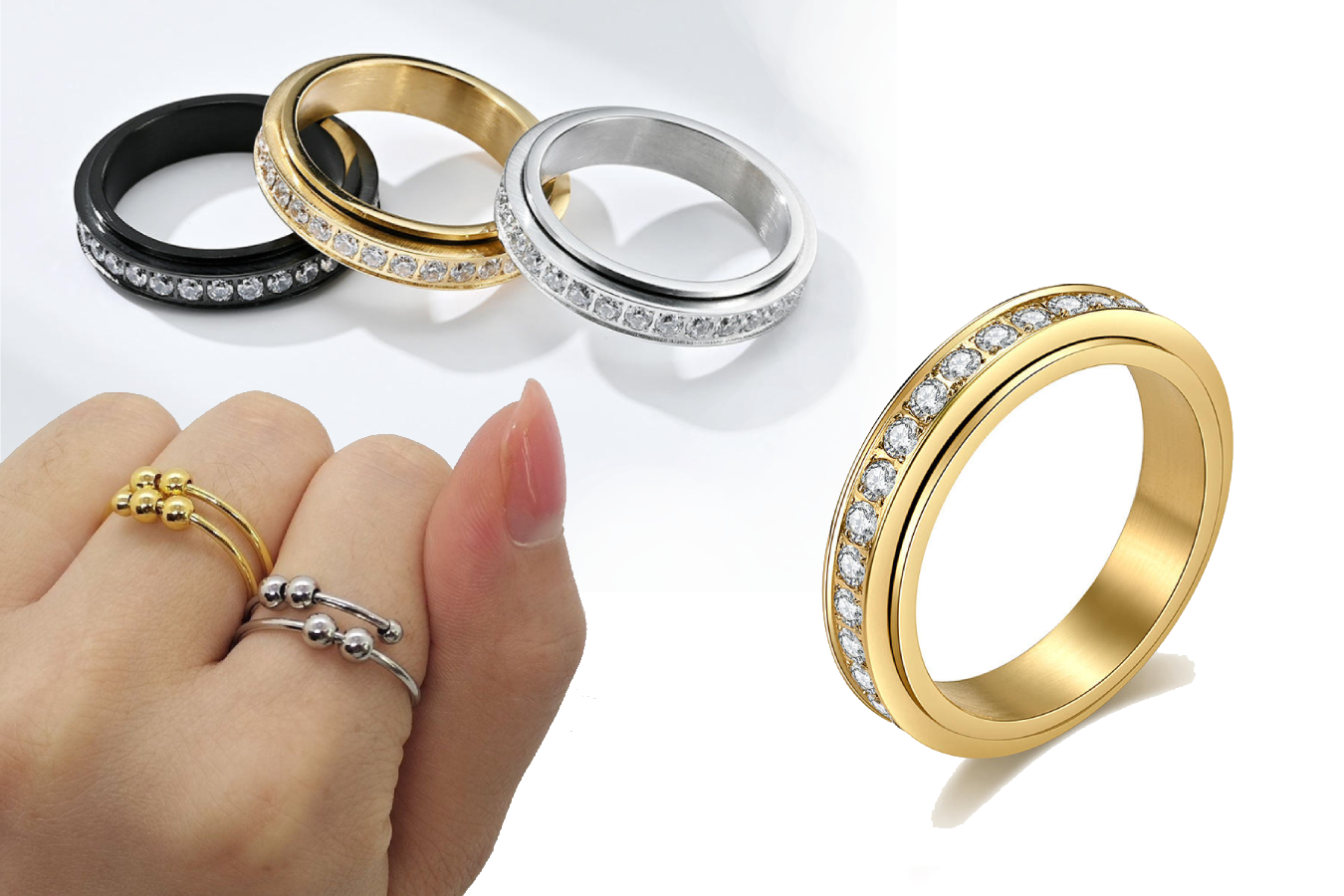
Do you find yourself biting your nails, tapping your foot, or picking at your cuticles when stress takes over? If so, you’re not alone. Millions of people experience nervous habits or restless energy when faced with daily pressures. While these little quirks may seem harmless, they can sometimes make stress feel worse — and even impact confidence.
Enter the anxiety ring: a stylish, subtle, and surprisingly effective tool designed to help calm the mind and refocus energy. What started as a wellness trend on platforms like TikTok and Instagram has quickly become a must-have accessory for people seeking peace in the middle of life’s chaos. But beyond the social media hype, what makes these rings so special? Let’s dive into the science, benefits, and practical ways to make an anxiety ring part of your wellness journey.
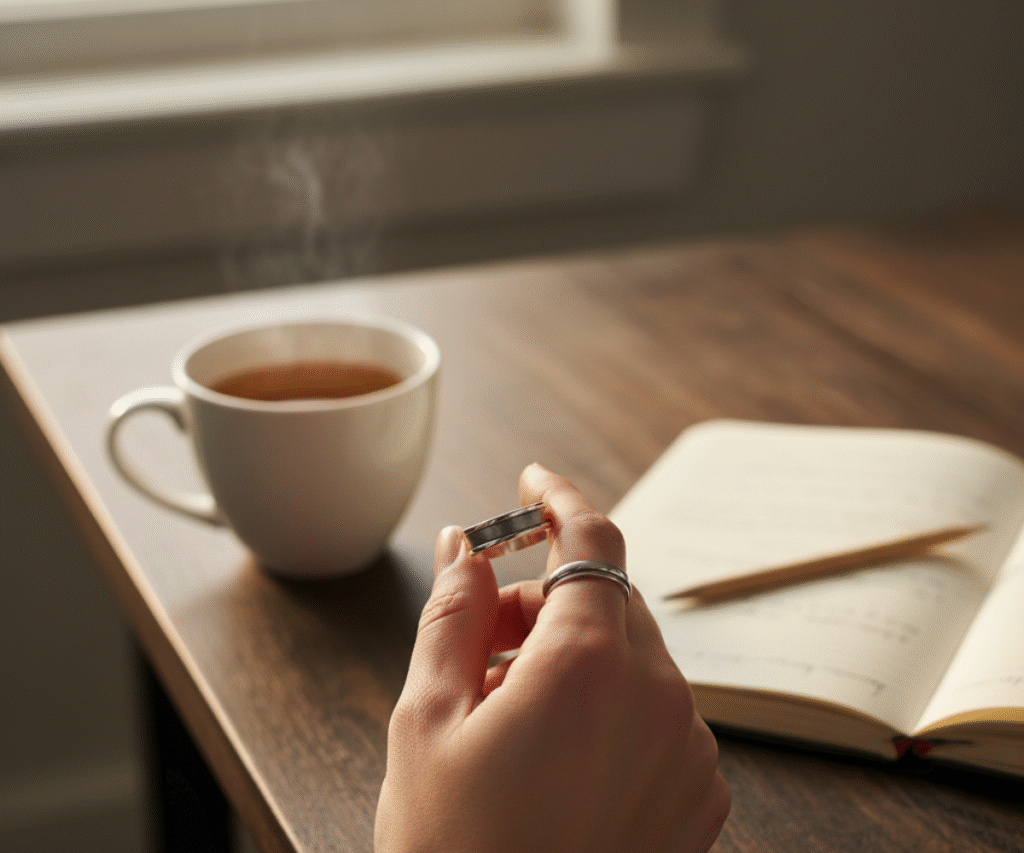
What Exactly Is an Anxiety Ring? (And Why All the Buzz?)
At its heart, an anxiety ring (often called a spinner ring, fidget ring, or meditation ring) is a piece of jewellery designed with a movable component. Think of it as a subtle, sophisticated fidget toy you wear on your finger. This movable part – be it a band that spins, small beads that slide, or textured elements you can touch – provides a discreet physical outlet for nervous energy.
The concept isn’t entirely new. Meditation rings, with their spinning elements, have roots in ancient spiritual practices, used to aid concentration during prayer or meditation. What’s new is their resurgence in popularity, especially among women seeking everyday stress relief.
So, why the sudden buzz? In a world increasingly dominated by screens and constant connectivity, we’re often overstimulated, yet paradoxically, our hands and minds crave a tactile, grounding experience. The rise of “mindful living” and the growing awareness around mental wellness have created the perfect environment for a tool that offers a simple, accessible way to manage everyday stress and anxiety.
They’re chic, they’re subtle, and unlike reaching for your phone or a stress ball, they blend seamlessly into your personal style. It’s about finding a practical way to bring mindfulness into your busy day, without anyone even needing to know you’re doing it.
The Science-Backed “Spin” to Calm: How Anxiety Rings Work Their Magic
It might seem too simple, a mere ring, to genuinely impact feelings of anxiety, but there’s a fascinating bit of psychology and neuroscience at play. The “magic” of an anxiety ring isn’t hocus pocus; it’s rooted in well-understood principles of stress management.
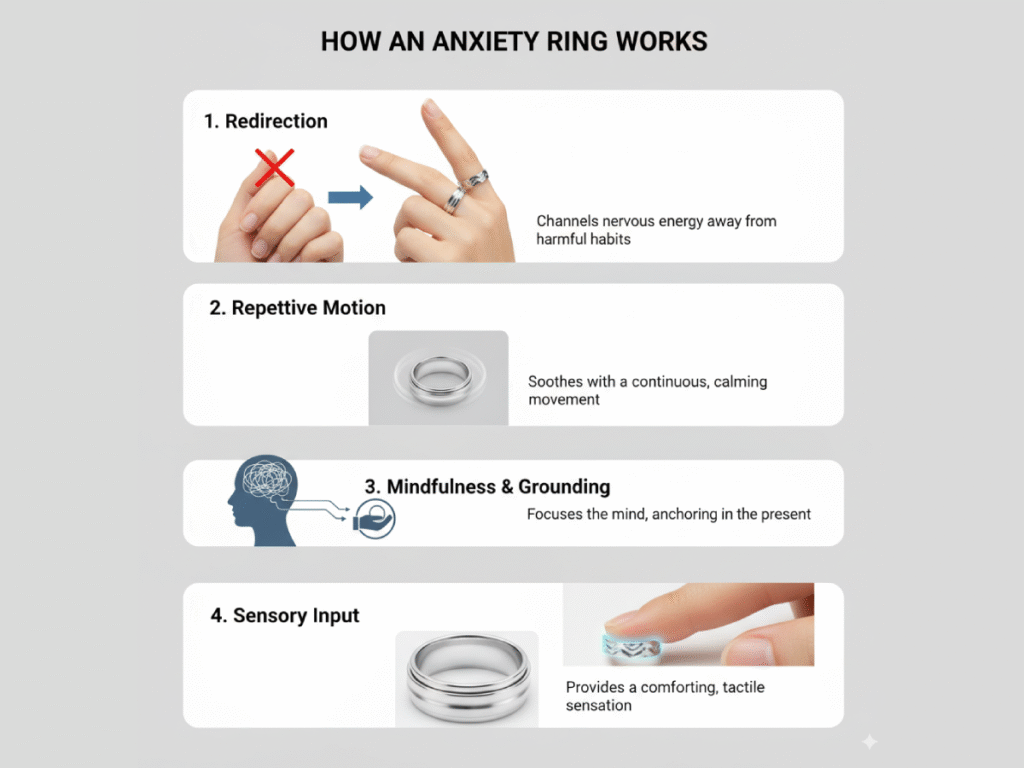
The Power of Tactile Stimulation and Fidgeting: Our brains are wired to seek sensory input. When we’re anxious or stressed, that energy often manifests as a need to do something. Fidgeting – whether it’s tapping a pen, shaking a leg, or biting your nails – is our body’s way of trying to release that pent-up energy. The problem is, many traditional fidgeting habits can be disruptive, damaging (like nail-biting), or even subconscious.
An anxiety ring redirects this natural human inclination into a harmless, repetitive, and intentional action. The simple act of feeling the cool metal, the texture, or the smooth spin provides a gentle, satisfying distraction that can break the cycle of anxious thoughts.
Grounding Yourself in the Present Moment: Anxiety often pulls us out of the present, either dragging us into worries about the future or regrets about the past. Grounding techniques are strategies that help bring your mind back to the “here and now.” Focusing on a physical sensation, like the movement of your anxiety ring, is a classic grounding exercise. By consciously feeling the ring, watching its movement, and noticing the sensation on your finger, you’re engaging your senses.
This act of focused attention helps to quiet the “noise” in your head, pulling your awareness away from anxious thought spirals and firmly planting you back in the present reality. It’s a mini-mindfulness exercise available at your fingertips, anytime, anywhere.
Activating the Parasympathetic Nervous System (Your “Rest and Digest” Mode): When you’re anxious, your sympathetic nervous system (your “fight or flight” response) is in overdrive. Your heart rate might increase, your breathing becomes shallow, and your muscles tense. Repetitive, gentle actions, like spinning an anxiety ring, can help signal to your brain that you’re safe and there’s no immediate threat.
This can, in turn, help to activate your parasympathetic nervous system, which is responsible for “rest and digest.” It slows your heart rate, deepens your breathing, and promotes a sense of calm. It’s a subtle but powerful biofeedback loop.
A Conscious Cue for Calm: Over time, as you consistently use your anxiety ring during moments of stress or overwhelm, your brain begins to associate the physical act of spinning with a feeling of calm. It becomes a conditioned response, a personal ritual.
Just seeing the ring on your finger can serve as a visual reminder to take a breath, check in with yourself, and engage in that calming motion. It’s like having a little “pause” button right there on your hand.
Finding Your Perfect Spin: Choosing Your Anxiety Ring
Just like any piece of jewellery, choosing an anxiety ring is a personal experience. It should not only function as a wellness tool but also resonate with your style and feel comfortable on your finger. Here’s what to consider when picking your perfect calming companion:
 Style and Design:
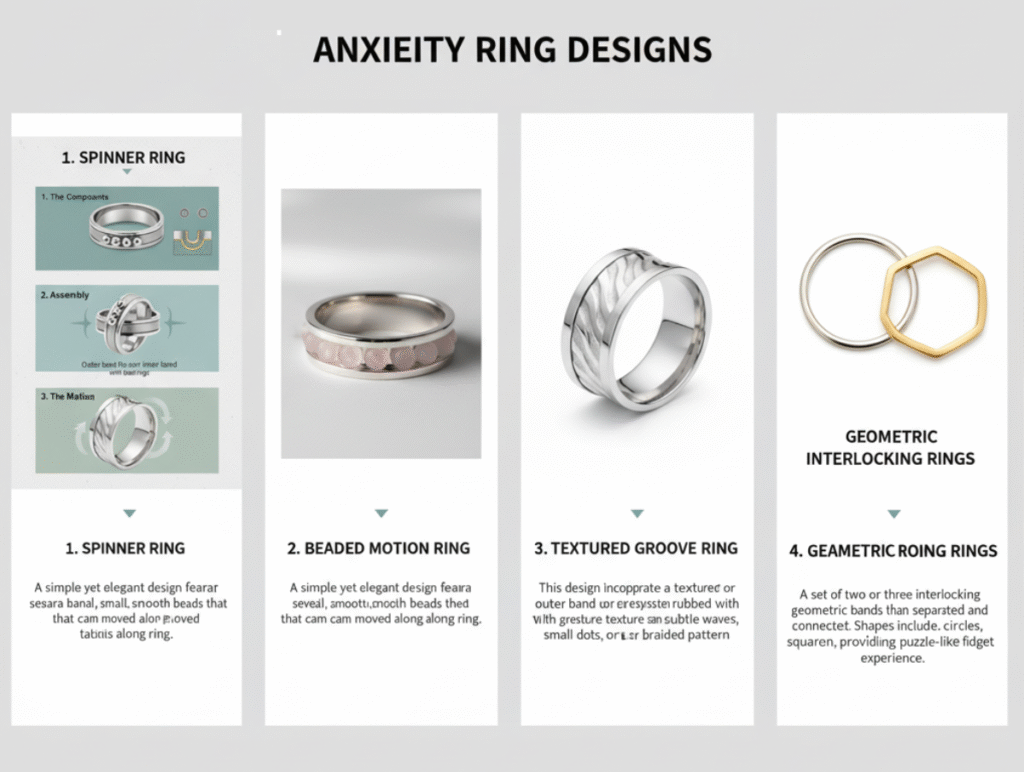
What Speaks to You? Anxiety rings come in a delightful array of designs. Do you prefer something minimalist and sleek, or perhaps a design with intricate details?
Spinner Bands: These feature an inner band that remains stationary on your finger while an outer band freely spins around it. They are often elegant and discreet.
Beaded Rings: These have small, individual beads that you can slide and manipulate around the band. They offer a different tactile experience and can be quite beautiful.
Textured Rings: While not always “spinning,” some rings incorporate unique textures or patterns that provide a satisfying sensory experience to trace with your thumb.
Gemstone Accents: Many rings incorporate gemstones, adding an extra layer of beauty and sometimes even symbolic meaning. Choose a style that genuinely makes you feel good when you look at it.
Materials:
Comfort and Durability The material of your anxiety ring is important for both comfort and longevity.
Sterling Silver: A popular choice for its beautiful lustre, hypoallergenic properties, and classic appeal. It can tarnish over time, but it is easily cleaned.
Stainless Steel: An excellent option for durability, resistance to tarnish, and a more contemporary look. It’s also often more affordable.
Gold-Plated/Rose Gold-Plated: Offers the aesthetic of gold at a more accessible price point. Be mindful that plating can wear off over time with frequent spinning.
Titanium/Tungsten: These are incredibly strong and lightweight metals, offering extreme durability and a modern feel.
Fit is Everything:
Your Second Skin. This is crucial. Your anxiety ring should feel comfortable, allowing the spinning or moving parts to function smoothly without being too tight or too loose.
Not too tight: It shouldn’t pinch or restrict blood flow, especially if your fingers swell.
Not too loose: It shouldn’t slip off easily, nor should the spinning mechanism feel wobbly or imprecise.
Consider where you plan to wear it. Many women choose their pointer finger, middle finger, or thumb for easy access to the spinning motion.
If possible, try on different sizes or measure your finger carefully, perhaps at a local jeweller, before purchasing online. A well-fitting ring will become a natural extension of your hand.
Other Ways to Manage Anxiety
While an anxiety ring can be a powerful and stylish tool for managing stress, it works best as part of a bigger self-care routine. In fact, anxiety affects both the mind and body, so combining small lifestyle changes with supportive practices can make a meaningful difference in how you feel every day.
1. Deep Breathing Techniques
For example, simple breathing exercises such as box breathing (inhale for 4 counts, hold for 4, exhale for 4, hold for 4) can calm the nervous system and reduce tension within minutes. Moreover, pairing this with the gentle motion of your anxiety ring can enhance the grounding effect.
2. Mindfulness & Meditation
In addition, mindfulness trains your brain to stay present instead of spiraling into worry. Even 5–10 minutes a day of guided meditation, mindful walking, or focusing on sensations (like spinning your ring) can significantly reduce stress levels over time.
3. Physical Activity
Similarly, movement is a natural anxiety reliever. Activities like yoga, stretching, or even a brisk walk release endorphins — the body’s “feel-good” hormones. As a result, consistent exercise doesn’t just reduce anxiety but also improves sleep and focus.
4. Journaling
Another helpful practice is journaling. Writing down your thoughts can help release mental clutter and provide perspective. For instance, try keeping a small notebook nearby to jot down worries, gratitude lists, or positive affirmations when anxiety feels overwhelming.
5. Healthy Lifestyle Habits
Beyond that, eating balanced meals, staying hydrated, and reducing caffeine or alcohol intake can have a surprisingly big impact on anxiety. Therefore, a well-nourished body supports a calmer mind.
Important Disclaimer
An anxiety ring is not a medical device and should not replace professional treatment. If you’re experiencing persistent or severe anxiety, It’s important to seek support from a healthcare professional, doctor, therapist, or counsellor. The ring can be a companion, but professional guidance offers deeper healing.
FAQs About Anxiety Rings
1. What is an anxiety ring?
An anxiety ring (sometimes called a spinner ring or worry ring) is a piece of jewellery with a movable outer band or beads. It’s designed to help manage stress and anxiety through repetitive motion.
2. Do anxiety rings really work?
Yes, many users report that they help reduce stress by offering grounding, distraction, and a calming physical habit. While not a medical treatment, they can be effective as part of a larger wellness routine.
3. Are anxiety rings only for women?
Not at all. Anxiety rings are unisex and come in various styles suitable for men, women, and teens.
4. Can I wear my anxiety ring every day?
Absolutely. In fact, wearing it daily helps build consistency, making it a reliable coping tool during stressful moments.
5. How much do anxiety rings cost?
Prices range widely depending on materials and design. Stainless steel versions are affordable, while sterling silver or gold-plated rings are more premium.
6. Do anxiety rings have side effects?
No physical side effects, but they should not be viewed as a replacement for therapy or medical treatment if you struggle with chronic anxiety.
Your New Go-To for Calm and Confidence
Life is busy, unpredictable, and sometimes overwhelming. But small tools can make a big difference. The anxiety ring is more than just jewellery — it’s a wellness game-changer that combines beauty with function. By offering grounding, comfort, and focus in moments of stress, it can become your discreet companion for calm and confidence.
Whether you’re at work, commuting, or winding down at night, this simple ring reminds you that peace is always within reach. Pair it with mindful practices, wear it with pride, and let it become part of your personal wellness journey.








Remote Jobs and Stress: How to Stay Healthy - womenwellness.co.uk
[…] unique challenges. Many workers struggle with loneliness, overworking, or constant distractions. Stress builds up quietly, and without realizing it, your work-life balance slips […]