

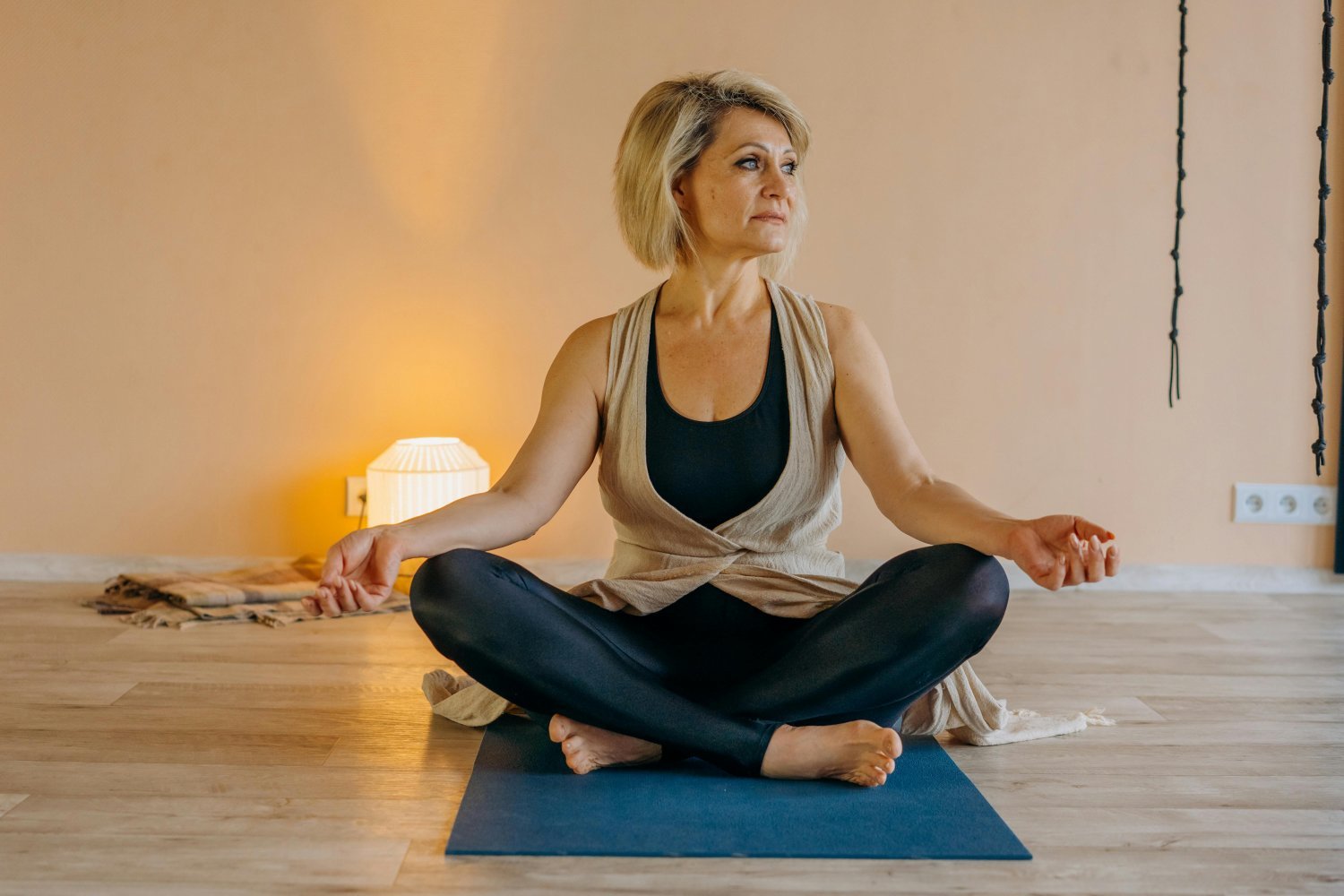
A 3-step workout for women over 50 can be a simple yet highly effective way to stay active, build strength, and maintain independence as you age. Moreover, fitness expert Shakira Akabusi—well known for her positive approach to movement—has highlighted a straightforward 3-step routine that is not only safe and effective but also specifically designed for older adults who want to remain strong, flexible, and independent.
This routine is perfect if you want to boost your energy, improve balance, and protect your joints; moreover, it requires no expensive equipment. In addition, for more insights, you can discover the top benefits of exercise for seniors.
In this article, we’ll explore:
- The 3 key exercises in the workout
- How many should you do (based on NHS recommendations)
- Whether it’s suitable for everyone
- Practical tips to make it part of your lifestyle
- FAQs to answer common concerns
Why Staying Active in Your 50s and 60s Matters
Many people believe that once you hit midlife, slowing down is inevitable. But research tells us a different story: regular movement can:
- Reduce the risk of heart disease, diabetes, and osteoporosis
- Improve balance and coordination (reducing the risk of falls)
- Support mental health and stress management
- Keep your muscles strong, helping with everyday tasks
- Boost energy and confidence
I’ve seen this first-hand; in fact, after adding short daily workouts to my routine in my early 50s, my mobility improved dramatically. Moreover, everyday tasks such as climbing stairs or carrying groceries soon became much easier.
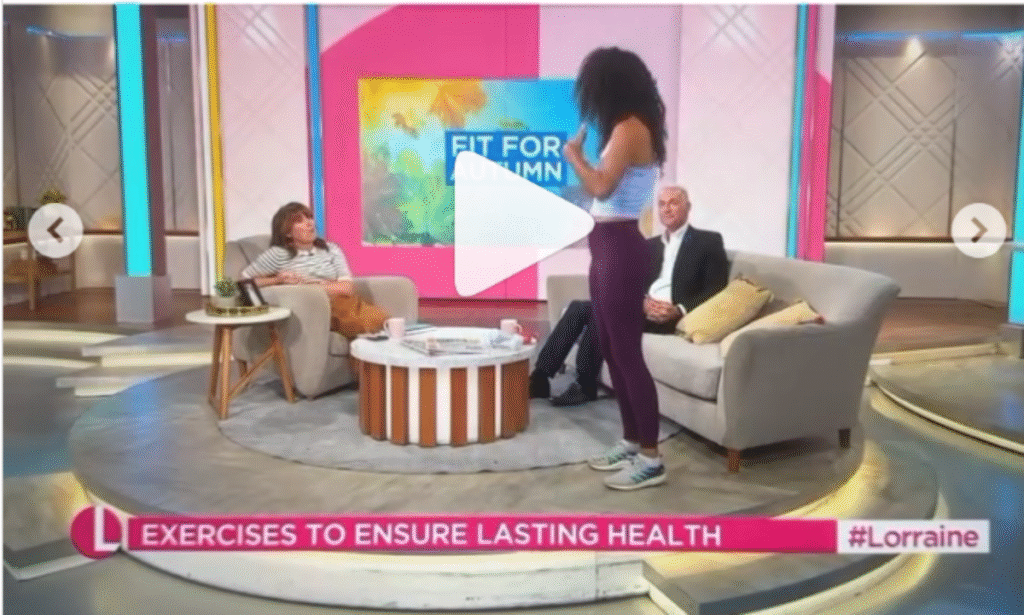
The 3-Step Workout Routine (Inspired by Shakira Akabusi)
Together, these three moves form the core of a 3-step workout for women over 50, and importantly, the routine is not only safe and practical but also easy to follow at home.
1. Sit to Stand Squats
This move closely mimics the everyday action of standing up from a chair, and therefore, it becomes one of the most functional exercises you can incorporate into your routine.
How to do it:
- Sit on a sturdy chair with feet flat on the floor, hip-width apart.
- Cross your arms over your chest or place them in front for balance.
- Push through your heels to stand up tall.
- Slowly sit back down with control.
Reps: Start with 8–10 repetitions, building up to 2–3 sets.
Why it helps:
- Strengthens thighs, hips, and glutes.
- Improves independence for daily activities.
- Builds balance and stability.
Sit-to-stand squats are one of the best functional exercises because they strengthen the legs and support independence in daily life. Research shows that strength training for older adults is one of the most effective ways to preserve muscle and bone health as we age.”
2. Step-Ups
Step-ups are great for cardio fitness, balance, and leg strength; moreover, they are easy to do since you only need a safe, sturdy step or low platform.
How to do it:
- Stand in front of a step or low staircase.
- Step up with your right foot, then bring your left foot up to join it.
- Step back down carefully, starting with your right foot.
- Repeat and then switch leading legs.
Reps: Do 10–12 step-ups per leg, repeat for 2–3 sets.
Why it helps:
- Strengthens legs and glutes.
- Improves coordination and balance.
- Mimics everyday actions like climbing stairs.
Adding step-ups into my routine not only gave me more confidence when climbing actual stairs but also improved my breathing. Moreover, this was a clear sign that my cardio fitness was gradually getting better.
3. Calf Raises
Strong calves are key for walking, balance, and reducing the risk of falls. Calf raises are simple but highly effective.
How to do it:
- Stand tall with feet hip-width apart, holding a chair or wall for support if needed.
- Slowly rise up onto the balls of your feet.
- Hold for a second, then slowly lower your heels back down.
Reps: Begin with 10–12 repetitions, working up to 2–3 sets.
Why it helps:
- Strengthens calves and ankles.
- Improves balance and circulation.
- Supports smoother walking and stair climbing.
When I started calf raises, I felt my legs tiring quickly. But after consistent practice, walking longer distances became easier, and even my posture improved.
Why This 3-Step Routine Works
This 3 step workout for women over 50 is effective because it covers three key fitness pillars for midlife:
- Strength → Keeps muscles and bones strong.
- Cardio → Supports heart health and energy.
- Mobility & Balance → Helps prevent falls and injuries.
It’s also short and manageable, making it easier to stay consistent — and consistency is what truly matters.
How Often Should You Do This Workout?
- Aim for 3–4 times per week.
- Combine with daily walking, yoga, or stretching for the best results.
- Remember, it’s not about pushing harder — it’s about moving regularly and feeling good.
My Experience with the 3-Step Workout
When I first tried this routine, I wasn’t sure it would be enough. But within a few weeks, I noticed:
- My legs felt stronger during walks.
- I had better posture while sitting at my desk.
- My energy levels improved, especially in the afternoon.
The best part? It didn’t feel overwhelming. Unlike long workouts I used to give up on, this one fit easily into my day — and I stuck with it.
Extra Wellness Tips for Staying Active in Your 50s and 60s
- Listen to your body: If you feel pain (not just muscle soreness), stop and adjust.
- Stay hydrated: Water supports joint health and energy.
- Focus on nutrition: A diet rich in calcium, protein, and whole foods supports your fitness goals.
- Get enough sleep: Recovery is just as important as the workout itself.
- Stay social: Join a walking group or do the routine with a friend for motivation.
How Many Should You Do? (NHS Recommendations)
One of the most common questions is: ‘How often should I exercise in my 50s or 60s?’ Fortunately, the great news is that the NHS not only provides clear but also highly achievable guidelines for older adults.
According to the NHS, adults over 50 should aim for:
- At least 150 minutes of moderate-intensity activity per week (that’s about 30 minutes a day, 5 times a week).
- Or 75 minutes of vigorous activity per week if you prefer something more energetic.
What counts as moderate-intensity exercise?
- Brisk walking
- Gentle cycling
- Swimming
- Dancing
- Water aerobics
These activities raise your heart rate, make you breathe faster, but still allow you to hold a conversation.
The beauty of Shakira Akabusi’s 3-step workout is that it can easily fit into these recommendations; in fact, just 10–15 minutes of this routine, when combined with walking or light cycling, can effectively help you meet the NHS target. Furthermore, it does so without requiring long or complicated gym sessions, which makes it both practical and sustainable.
Is the Workout Suitable for Everyone?
This routine is designed to be gentle, safe, and adaptable, making it suitable for most people in their 50s and 60s. However, there are a few important considerations:
- Great for beginners – Because it uses bodyweight and simple moves, even those who are new to exercise can follow along.
- Low-impact options available – For example, squats can be done using a chair, and push-ups can be done against a wall to reduce strain.
- No equipment needed – This makes it practical and accessible for home use.
When to check with a doctor first:
- If you have chronic conditions (like arthritis, heart disease, or osteoporosis).
- If you’ve had recent surgery or injuries.
- If you feel pain, dizziness, or chest tightness during exercise.
Always listen to your body. It’s normal to feel a little sore when starting out, but sharp pain is a signal to stop.
From personal experience, I found that even on days when I felt tired, simply starting with a gentle march in place gradually gave me the energy to continue. Moreover, the routine is flexible enough that you can easily adapt it depending on how your body feels each day. As a result, it encourages consistency without adding unnecessary pressure.
Weekly Workout Plan Template for Your 50s and 60s
One of the most common struggles people face is sticking to a routine; however, having a simple plan can make all the difference. For this reason, the sample 7-day workout plan below not only combines Shakira Akabusi’s 3-step workout for women over 50 but also integrates NHS-recommended activities such as walking, swimming, and cycling. As a result, it becomes both practical and sustainable for long-term success.
This schedule is flexible, and therefore, you should feel free to adapt it according to your lifestyle and energy levels. Moreover, making small adjustments ensures it remains practical and sustainable over time.
On day 1: Strength & Balance
- Sit to Stand Squats – 2 sets of 8–10 reps
- Step-Ups – 2 sets of 10 reps each leg
- Calf Raises – 2 sets of 12 reps
- 10-minute brisk walk outdoors
For day 2: Active Recovery
- 20–30 minutes of light walking or cycling
- Gentle stretching (hamstrings, calves, shoulders)
By day 3: Strength Focus
- Sit to Stand Squats – 3 sets of 10–12 reps
- Step-Ups – 3 sets of 12 reps each leg
- Calf Raises – 3 sets of 15 reps
- Optional: Light hand weights for extra challenge
Day 4: Cardio & Core
- 20 minutes of swimming, brisk walking, or dancing
- 2 sets of seated knee lifts (10 reps each leg) to strengthen the core
Day 5: Mixed Movement
- 10–15 minutes of the 3-step workout (all three moves)
- 15-minute bike ride or outdoor walk
Day 6: Flexibility & Balance
- 20 minutes of yoga or gentle Pilates (focus on stretching and posture)
- Calf Raises – 2 sets of 15 reps
- Step-Ups – 1 set of 8 reps per leg
Day 7: Rest & Recovery
- Gentle stretching or light walking
- Focus on hydration, healthy meals, and relaxation
Following a structure like this made it much easier for me to stay consistent. Instead of asking “what should I do today?” I already had a plan. The best part is that this template can be adjusted — if you miss a day, just pick up where you left off.
If you’re looking for more ways to stay active beyond these three simple moves, you might enjoy creating a summer workout routine that’s tailored to your lifestyle and fitness level.
Why This Plan Works
- Meets NHS guidelines for moderate activity (150 minutes/week).
- Balances strength, cardio, and flexibility.
- Adaptable for all fitness levels.
- Keeps workouts short and manageable (10–30 minutes a day).
Frequently Asked Questions (FAQs)
1. Can I do this workout if I have knee or back problems?
Yes, but always check with your doctor first. For squats, you can reduce the depth or sit and stand from a chair instead.
2. Do I need equipment for this workout?
No equipment is needed; instead, a sturdy wall or chair is usually enough to provide the balance support you may require.
3. How long will it take to see results?
Most people begin to notice better strength, increased energy, and improved balance within just 4–6 weeks of consistent practice. Furthermore, these benefits often continue to build over time, making regular exercise even more rewarding.
4. Is this workout only for women?
Not at all — while inspired by a women’s fitness coach, these moves are safe and effective for anyone in their 50s or 60s.
5. Can I combine this with other exercises?
Yes! In fact, walking, yoga, Pilates, or light weight training not only complement this workout but also pair perfectly with it to enhance overall fitness.
6. What if I get tired easily?
To begin with, start small — even one set per day counts as progress; in fact, it lays the foundation for consistency. Over time, as your stamina improves, you can gradually build up the intensity, and consequently, enjoy steady and sustainable results.
Conclusion: Small Steps, Big Benefits
Exercise in your 50s and 60s doesn’t have to be intimidating; on the contrary, it can be approachable and even enjoyable. By incorporating simple moves such as sit-to-stand squats, step-ups, and calf raises, and then combining them with regular walking or swimming, you can not only build strength but also improve balance. Consequently, you’ll be able to enjoy life with greater energy and confidence.
The key takeaway? Consistency is more important than intensity. Start small, listen to your body, and celebrate progress — no matter how little.
As Shakira Akabusi reminds us, workouts should feel empowering rather than exhausting. In fact, with this 3-step routine and weekly plan, staying active in midlife can be not only simple and safe but also genuinely enjoyable.
Moreover, staying active doesn’t have to be complicated; instead, a straightforward 3-step workout for women over 50 is often all it takes to remain strong, balanced, and full of energy.












Stress Management for Women: Simple Techniques - womenwellness.co.uk
[…] 3-Step Workout for Women Over 50 (Inspired by… […]